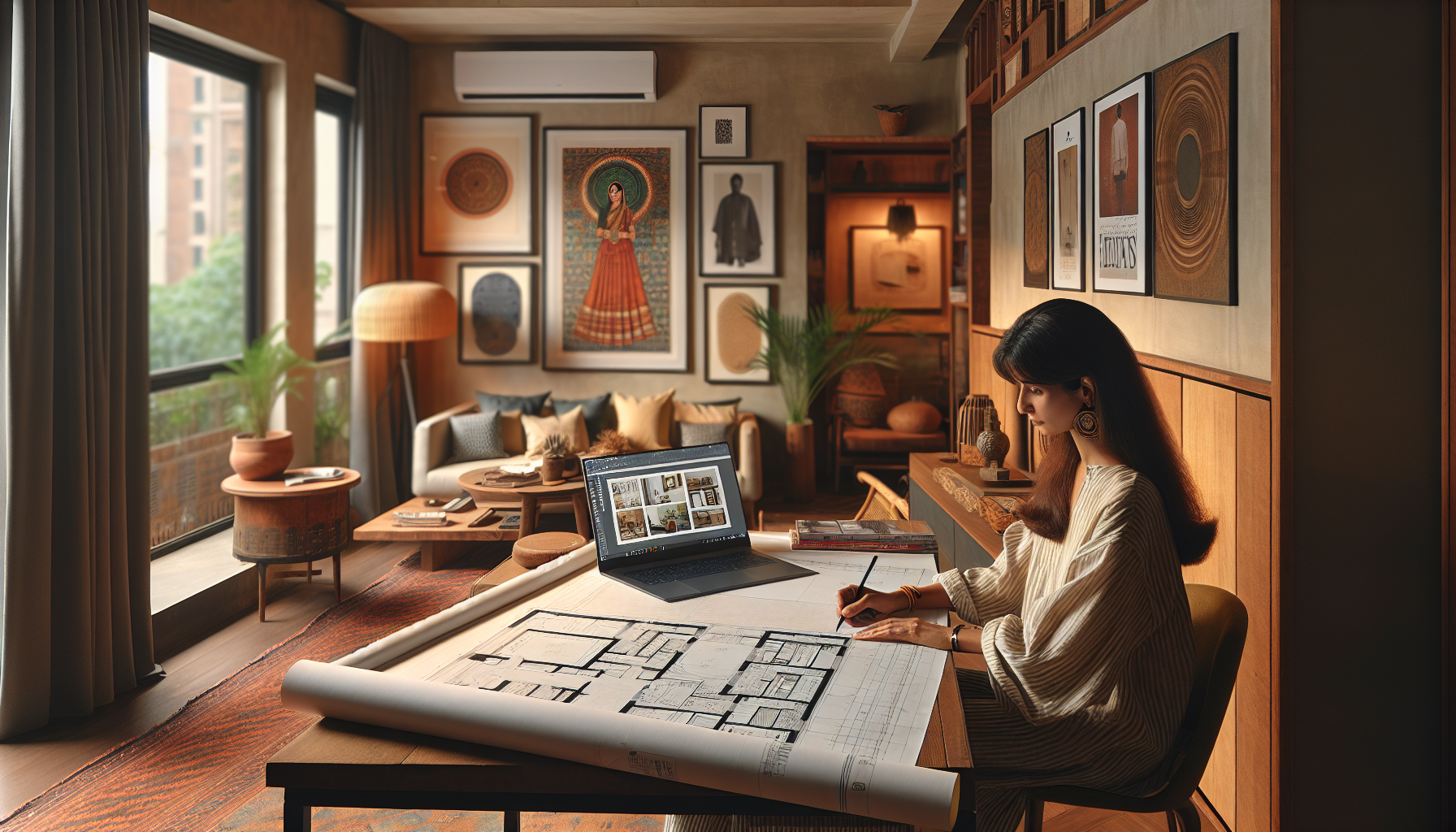
Imagine a lazy Sunday afternoon. The monsoon rain taps gently against your window. You sip on steaming masala chai. Your eyes wander around your living room, a perfect blend of simplicity and color. This is where Japandi meets Indian design. Japandi’s calming minimalism paired with India’s vibrant textures and colors creates a space that’s both serene and lively.
 Photo by ArtHouse Studio on Pexels
Clean Lines and Bold Textures
Japandi design emphasizes clean, unfussy lines. Think minimalist Scandinavian with a touch of Japanese aesthetics. Indian design, on the other hand, is known for its rich textures. By combining these, you can create a balanced space that feels open yet welcoming. Use simple wooden furniture made from teak or sheesham for a sturdy foundation. Then, add bold textures with Jaipur Rugs or vibrant Kanjeevaram cushions. This combination keeps the room lively without overwhelming the senses.
For instance, a sleek, low-profile sofa can be paired with a vivid, handwoven dhurrie. This blend of minimalism and texture is visually striking yet functional.
 Photo by Alexander Zvir on Pexels
Earthy Colors and Natural Materials
Both Japandi and Indian designs love earthy colors and natural materials. Japandi favors neutral tones like beige and soft greys, while Indian design celebrates deep reds, saffrons, and indigos. Mix these to get warmth and depth in your space. Use earthy-hued Athangudi tiles for your flooring and neutral-colored walls to let these colors pop.
Incorporating natural materials like bamboo, rattan, and cotton can bridge the two styles. A rattan chair next to a carved wooden table with a brass lamp from Dilli Haat creates a delightful contrast.
Quick Tip: Incorporate Indian brassware for functional decor. A brass diya can add a warm glow, and it's affordable, starting at ₹250.
 Photo by Max Vakhtbovych on Pexels
Declutter and Decorate Mindfully
Japandi encourages decluttering, a concept that aligns well with our busy urban lives. But it doesn’t mean bare walls. You can use Indian crafts like Kondapalli toys or Channapatna woodwork for thoughtful decorations. These pieces add character without cluttering your space.
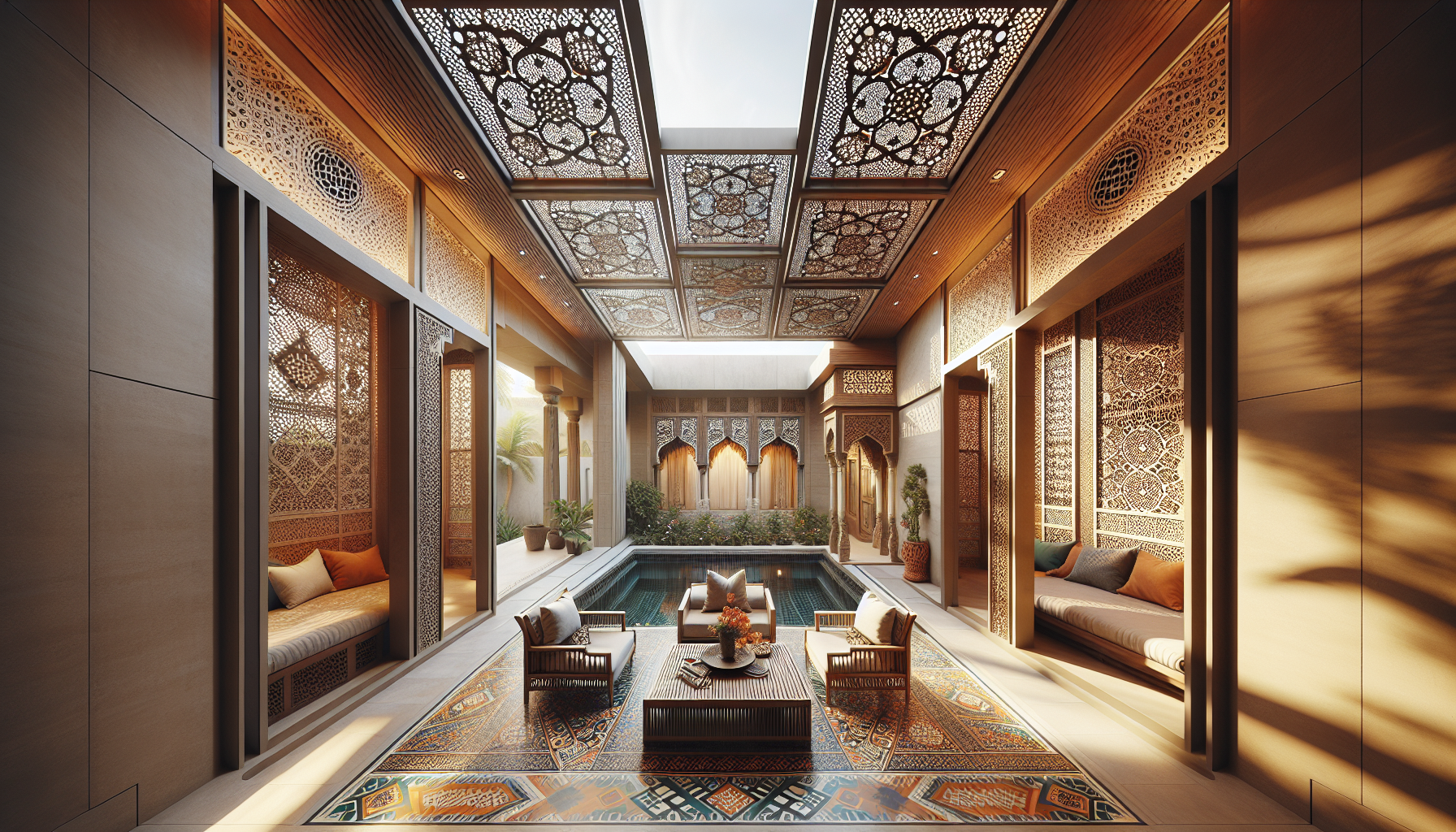
Choose a few statement pieces rather than many small items. A large Rajasthani jaali work panel can serve as a stunning wall feature. This way, you maintain a clean aesthetic with cultural richness.
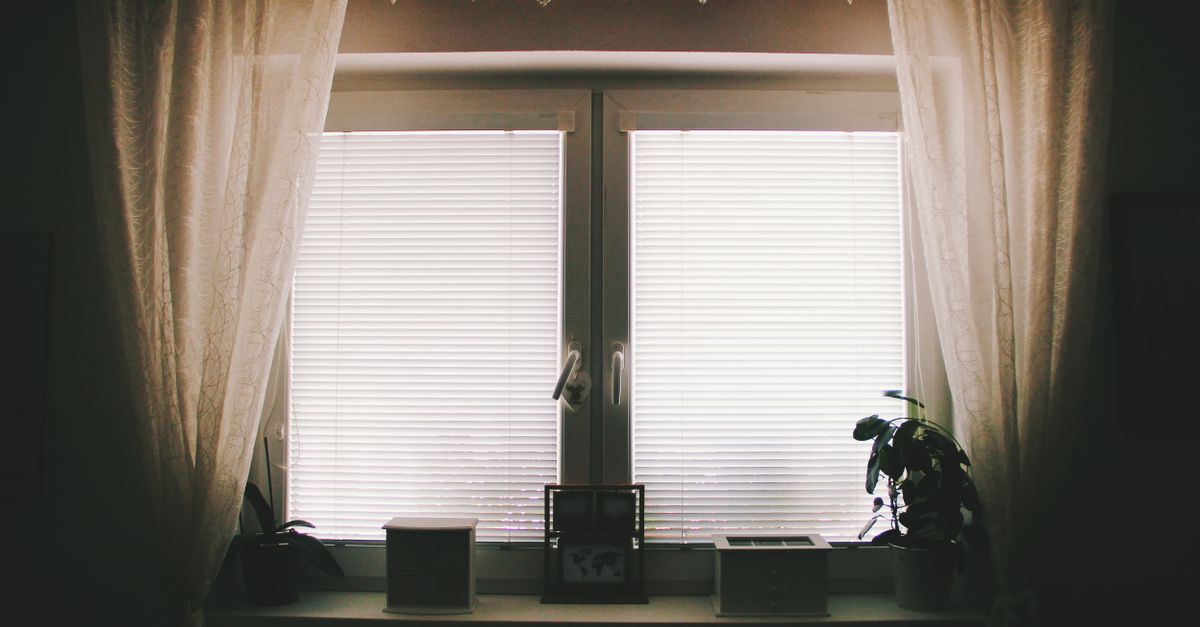 Photo by Dominika Gregušová on Pexels
Light and Space
Light plays a crucial role in both styles. Japandi prioritizes natural light and open spaces. You can achieve this by using sheer curtains and light, airy fabrics. Indian homes can enhance this with traditional jharokha windows or Mughal arches that frame spaces elegantly.
Opt for white or light-colored walls to reflect light, and use strategically placed mirrors to give the illusion of more space. Let your home breathe by keeping windows uncovered or using minimal drapes.
Bringing It All Together
The beauty of combining Japandi with Indian design lies in the harmony of opposites. It’s about creating a home that’s both calming and full of life. Start small. Mix and match gradually, and watch your space transform into a unique sanctuary. Embrace the simplicity of Japandi and the vibrancy of Indian design, and let your home tell your story.